Encapsulation Technology
Some materials only fail because the world reaches them.
Many of the most capable materials we know how to make are also among the most delicate. They convert light into electricity, emit light of their own, or store energy with remarkable efficiency — and then, exposed to ordinary air, they begin to come apart.
Oxygen and water vapour are usually enough. What limits these materials is rarely what they can do. It is how long they can keep doing it.
01
The observation
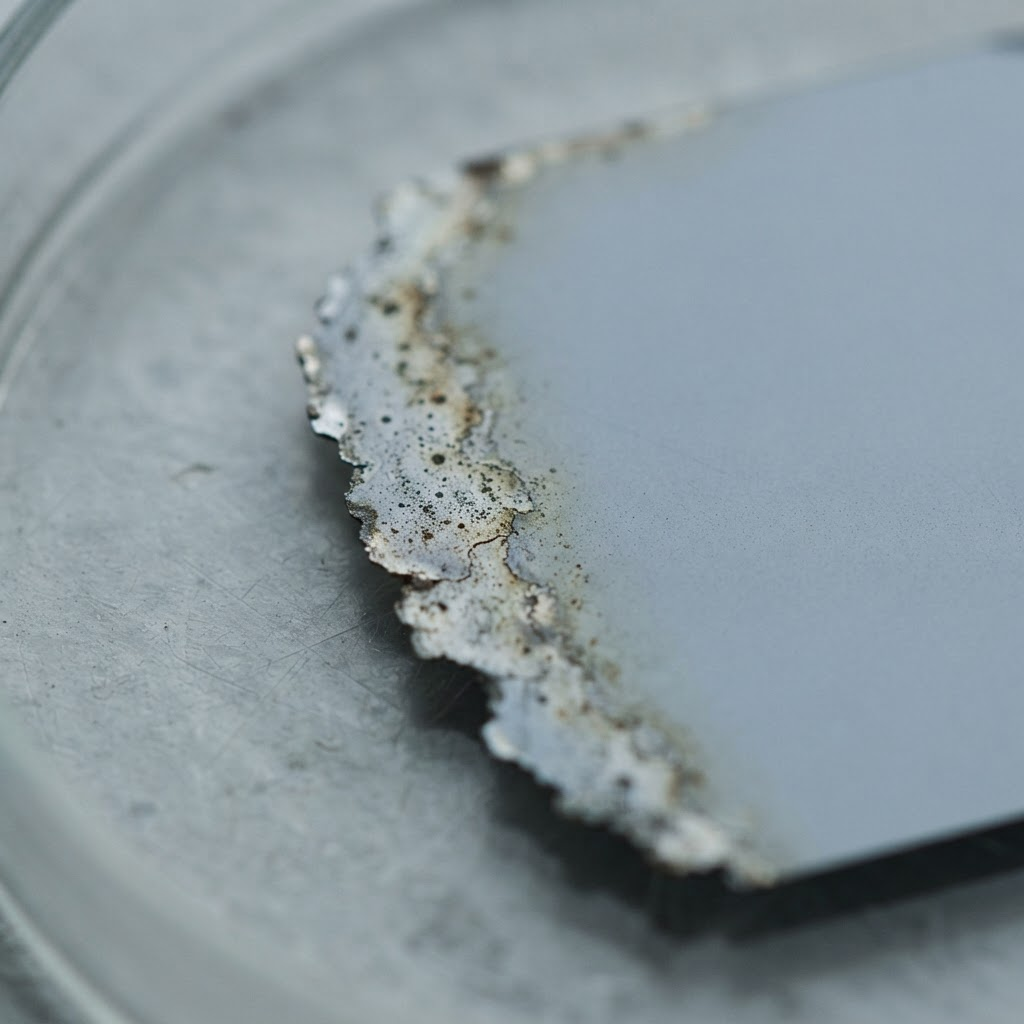
Degradation starts at the boundary. Where the material meets the atmosphere, molecules of oxygen and water arrive, react, and change the chemistry that made the material useful in the first place.
It advances inward slowly and unevenly — a darkening edge, a dead spot, a gradual dimming. The interior may still be sound long after the surface has begun to fail. The material does not wear out from use so much as from exposure.
02
Why it matters
A material that performs brilliantly for a short time is often less valuable than one that performs modestly for years. Lifetime is what decides whether a technology is worth building at scale.
This is why so much promising work in energy and light-emitting materials never leaves the laboratory. The performance is real, but it cannot be sustained long enough to matter. The limiting factor is not the material — it is the environment it has to survive.
03
The scientific challenge
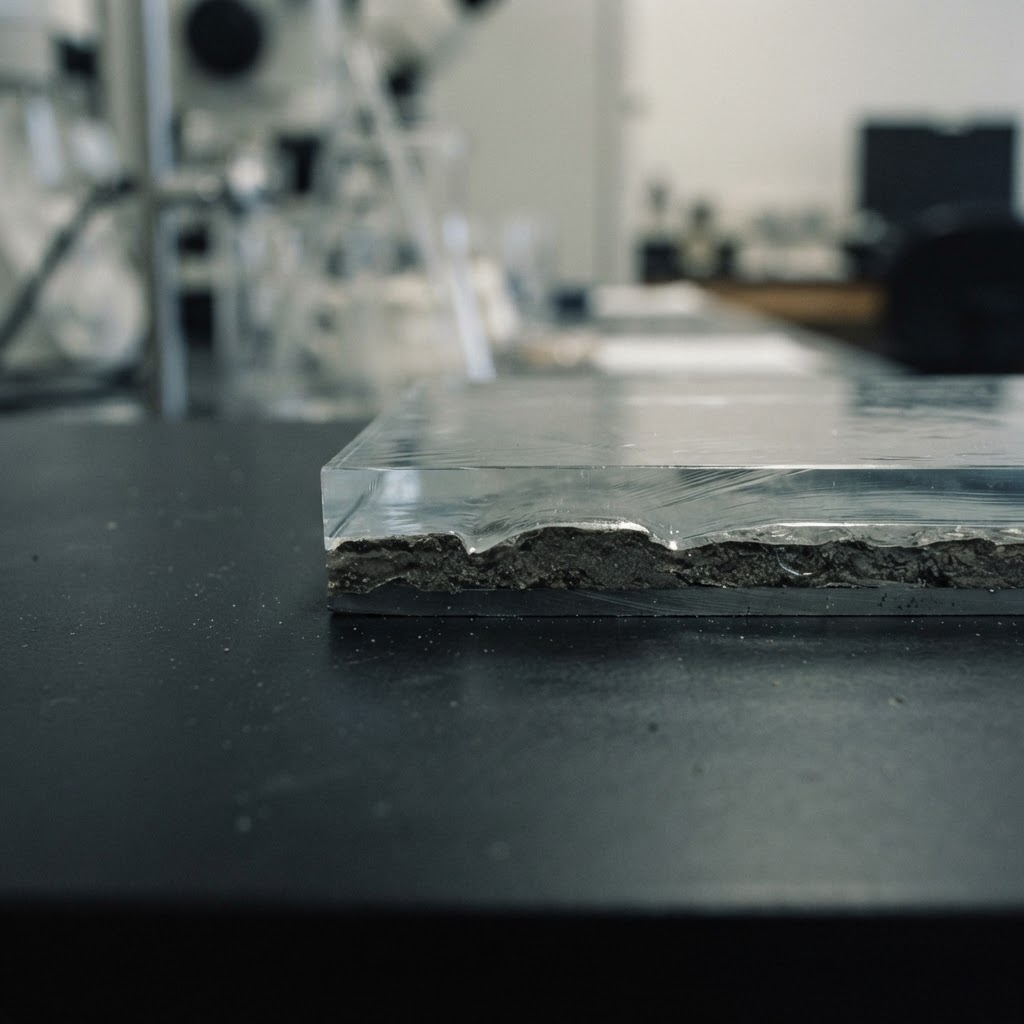
The task is to place a barrier between the material and the atmosphere — thin enough not to interfere with how the material works, complete enough to hold the environment out. A single microscopic gap is enough for degradation to find a way through.
The difficulty is that the barrier must do several things at once. It has to be transparent where light must pass, flexible where the material bends, and stable over the years it is meant to protect. Encapsulation is the engineering of that boundary — a surface whose purpose is to keep the world at a distance.
Current research
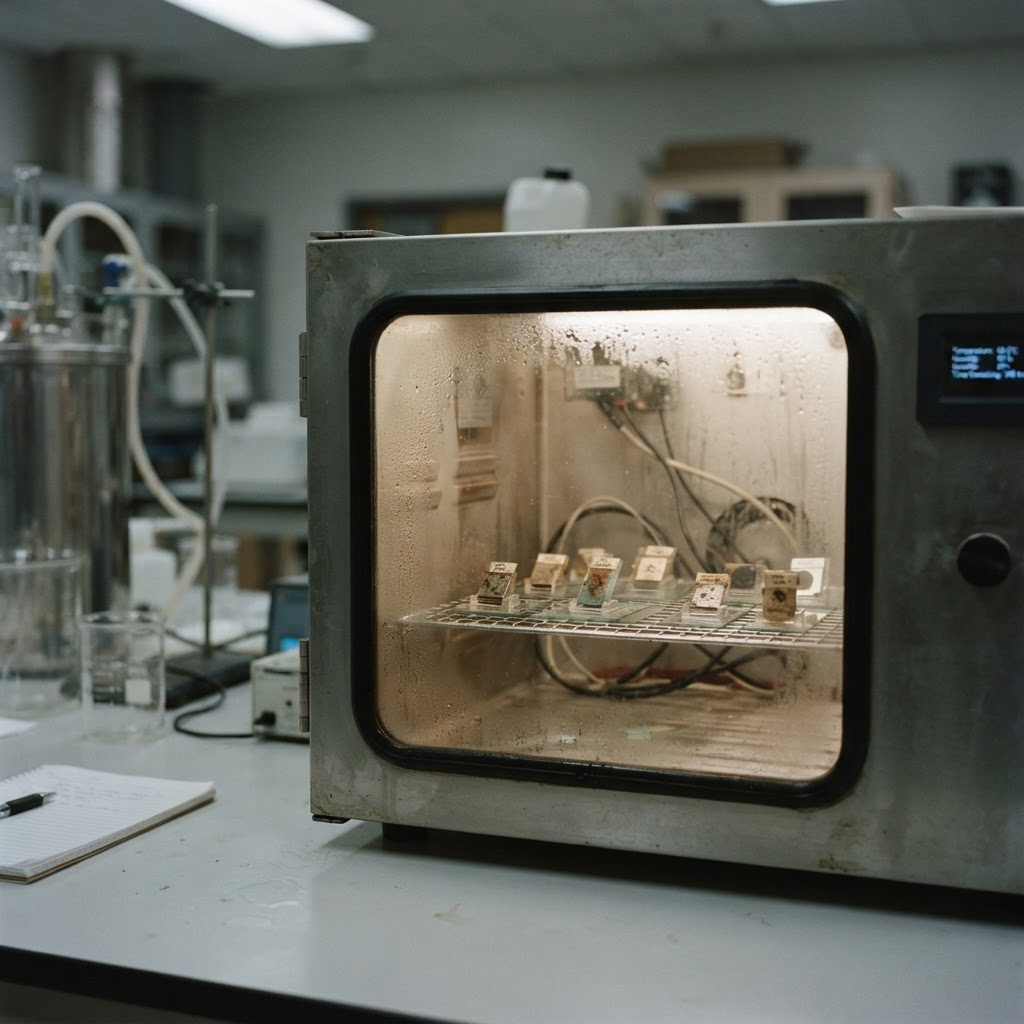
The work today is in preparing thin barrier layers and measuring how well they slow the passage of oxygen and moisture to the material beneath. Samples are sealed, held under controlled heat and humidity, and observed as they age against unprotected references.
We are looking for how little material is needed to make a meaningful difference to lifetime, and whether a barrier can be kept thin and unobtrusive while still holding the environment out for long enough to count.
Where this stands today
This programme is at an early, exploratory stage. The intent is to extend the working life of sensitive materials by engineering the barrier at their surface, and that intent is still being tested against evidence.
We are not claiming a finished technology, and we are not yet describing applications. Should the approach prove sound, it would matter wherever a material's usefulness is cut short by its environment rather than its performance. That work is ahead of us.