Optical Surface Technology
Every sheet of glass reflects some of the light that meets it.
Look at a window at the right angle and you see it: a faint image of the room laid over whatever lies beyond the glass. Reflection happens wherever light passes from air into glass, and again where it passes back out.
It is a natural consequence of the two materials meeting. For most of the history of glass, it has simply been accepted as part of how a transparent surface behaves.
01
The observation
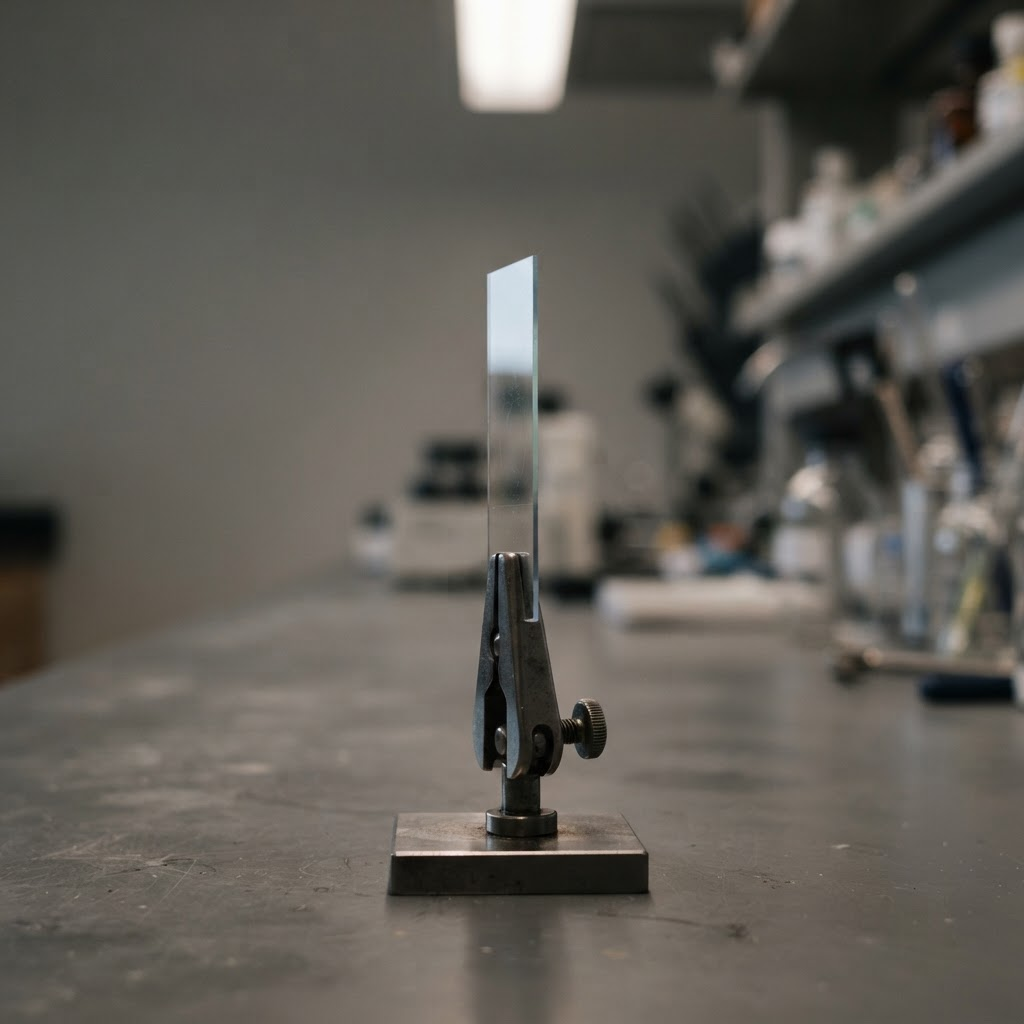
Reflection occurs at the boundary between air and glass. Some of the light arriving at that surface returns rather than passing through, and the same happens at the far surface where the light leaves the glass again.
None of this requires special conditions. It is present in any ordinary pane, in daylight and under lamps, whether or not anyone is looking for it.
02
Why it matters
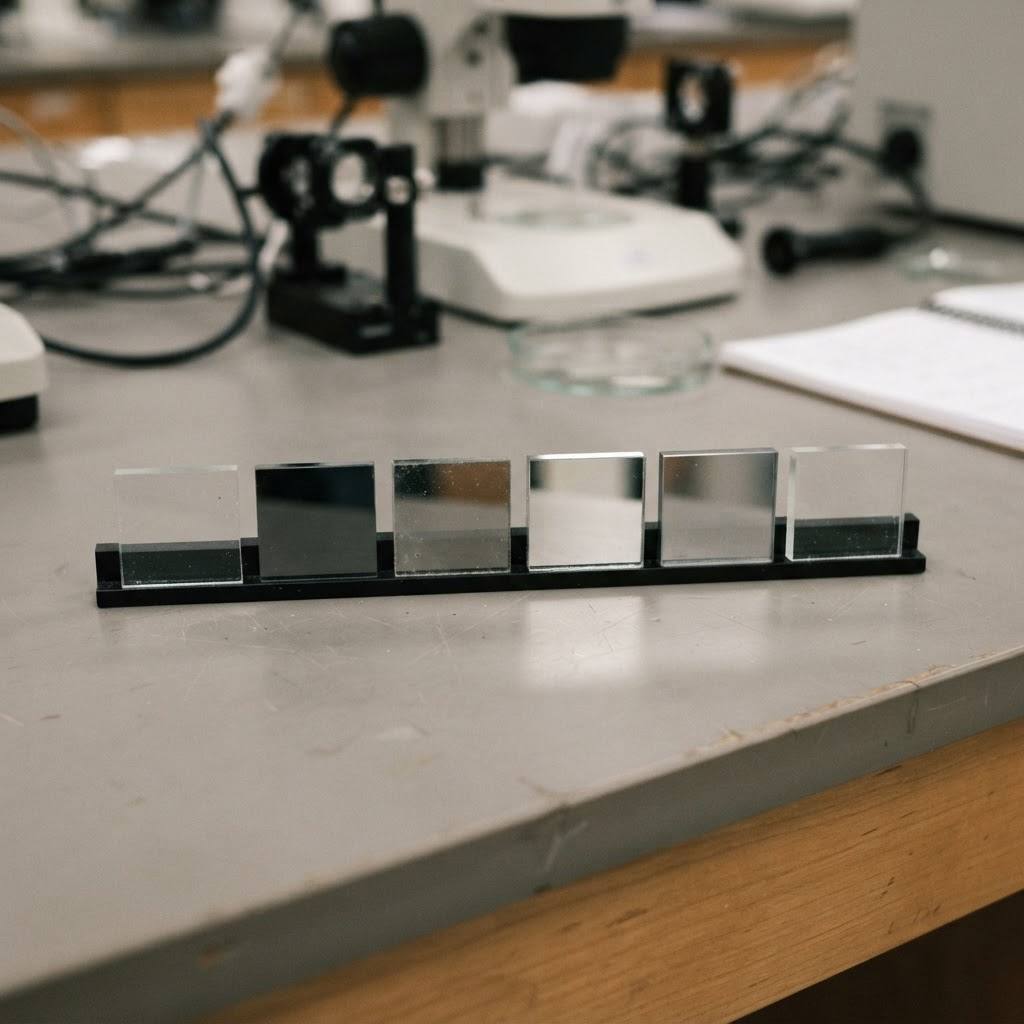
Light that reflects away is light that never reaches what lies behind the glass. It shows up as glare on a screen, as a loss of clarity through a lens, and as reflections that compete with the image a surface is meant to carry.
In systems built from many optical surfaces, these small losses accumulate. Reducing reflection is well understood in principle, but doing so consistently across the range of wavelengths and viewing angles a surface encounters remains difficult.
03
The scientific challenge
Anti-reflective coatings are not new. Thin layers deposited on glass, designed so that reflected light largely cancels, have been made for decades and are found across optics and displays.
The open question is whether low reflectance, broad spectral performance, wide angular performance and long-term durability can be achieved at the same time, in the same coating. Reaching any one of these is manageable; holding all of them together is the scientific challenge this programme is built around.
Current research
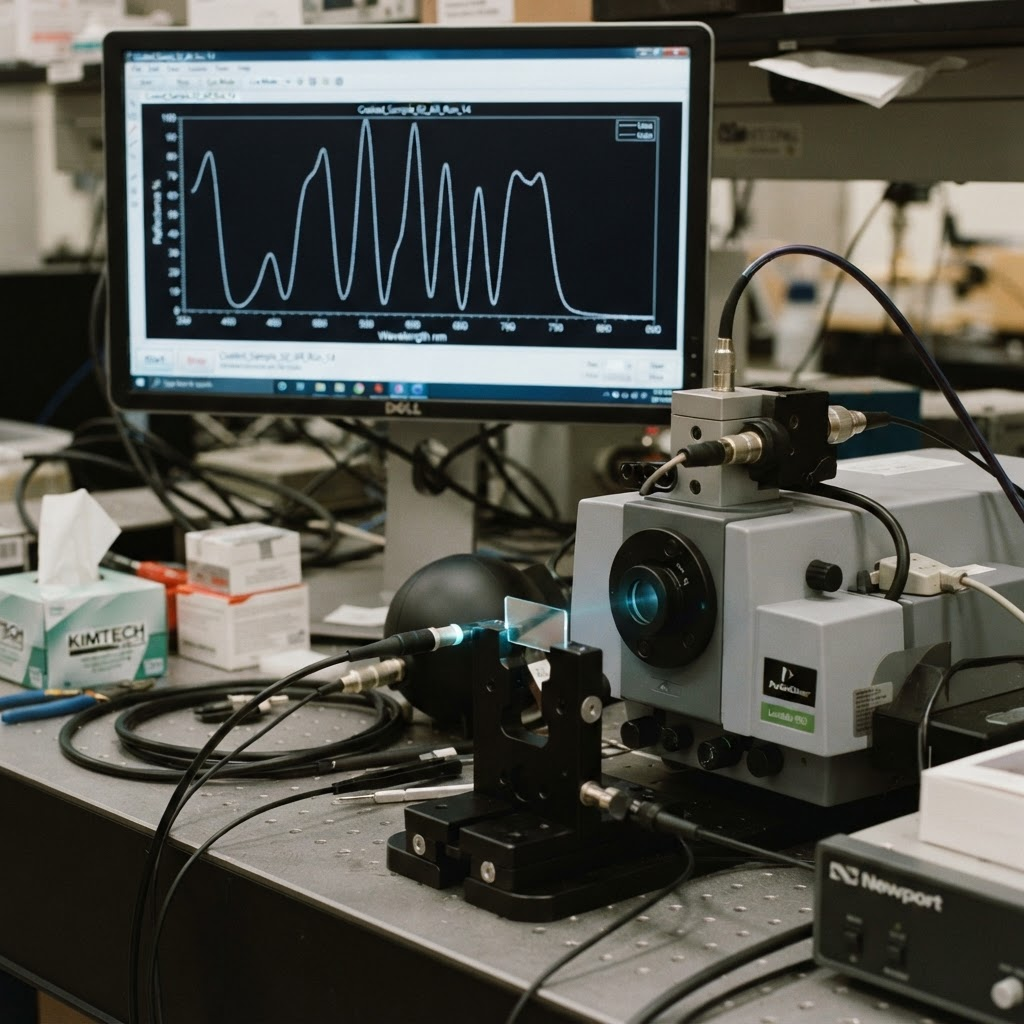
The work today is in material synthesis, thin-film deposition and optical measurement. Candidate coatings are prepared, applied to glass, and then measured for how much light they reflect and transmit across wavelength and angle.
Those measurements are compared with what the coating design predicts, and the samples that hold up are taken through durability testing. The emphasis throughout is on understanding how the materials behave through evidence, rather than on claiming a level of performance.
Where this stands today
Polgaze is developing coating systems that reduce reflection at the surface of glass. This work is still experimental, and we are not yet describing finished performance or applications.
The next milestone is to demonstrate measured optical performance that consistently matches the predictions of the coating design. Until that evidence is in hand, the programme remains a proof-of-concept.