Surface Protection Technology
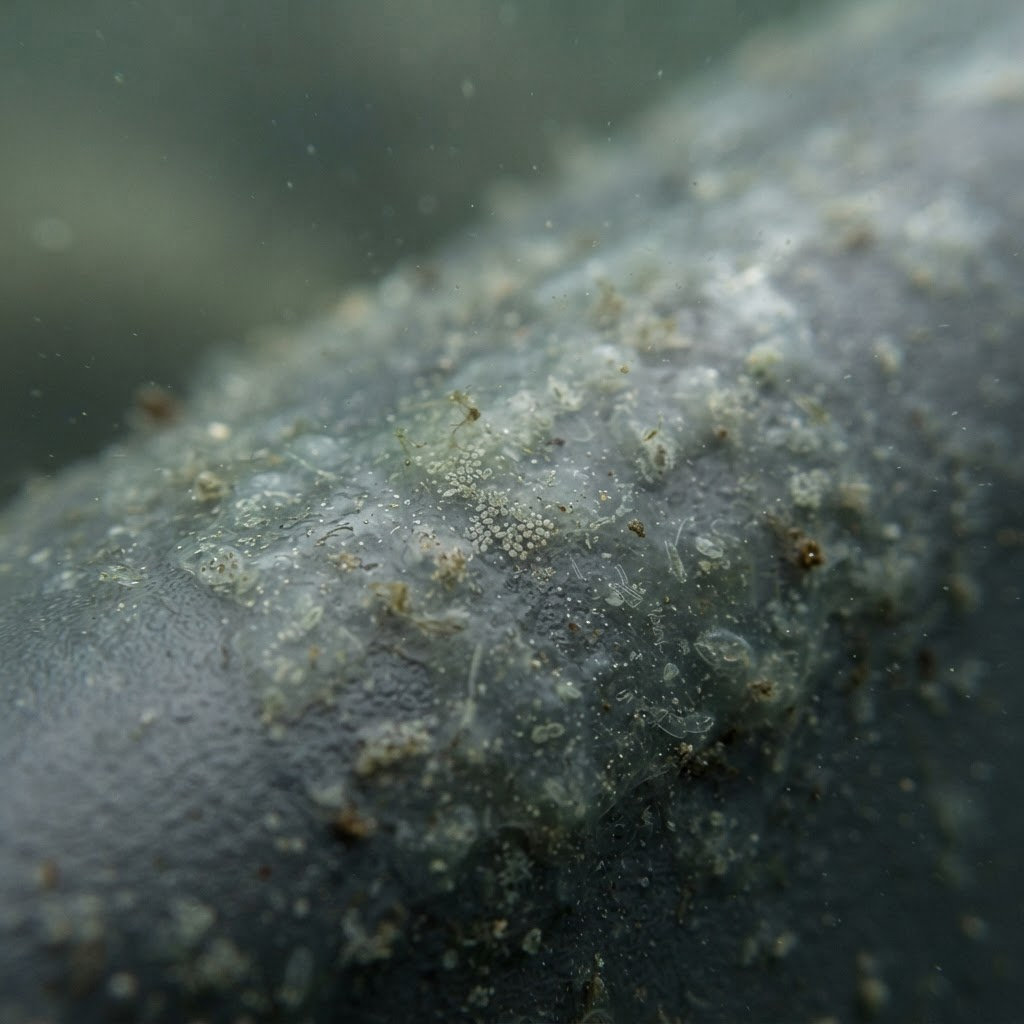
Almost any surface left in a living environment is colonised.
Put a clean surface into water, or leave it exposed to a moist environment, and living things begin to settle on it. First a thin film of molecules and microorganisms, then larger organisms that anchor to what has already gathered.
This is biological fouling. It happens on almost any material, and it has been treated for a very long time as simply the way surfaces behave.
01
The observation
Fouling begins at the interface, before anything is visible. Within minutes of immersion, dissolved molecules coat the surface and form a conditioning layer. Microorganisms attach to that layer, multiply, and build a biofilm.
The biofilm is not incidental. It changes the surface the next organisms encounter, and makes further settlement easier. What starts as a molecular film becomes a foothold for everything that follows.
02
Why it matters
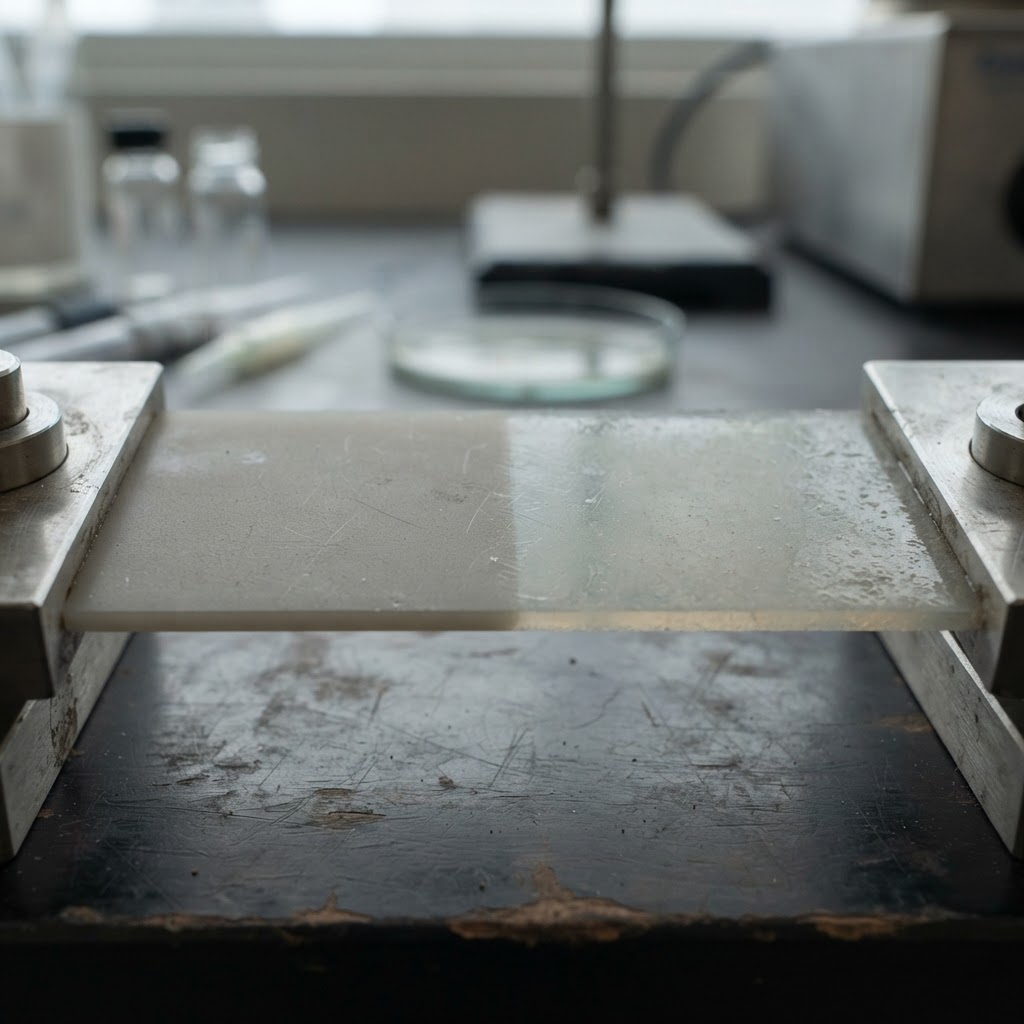
Once a surface is colonised, its properties change. It grows rougher, heavier, and less predictable. Keeping it clean means repeated intervention — scrubbing, replacing, or applying substances designed to kill whatever lands.
Because fouling has been accepted as unavoidable, the usual response is to manage its consequences rather than to question the assumption behind it: that a surface must passively accept whatever settles on it.
03
The scientific challenge
The conventional way to resist fouling is chemical: release a substance toxic enough to discourage organisms from settling. It works by harming the biology around the surface, and it depletes as it leaches away.
The question this programme asks is different. Can a surface resist settlement through its own physical design — its texture, energy and structure — rather than by releasing anything at all? That moves the problem from chemistry that acts on the environment to material behaviour engineered at the surface itself.
Current research
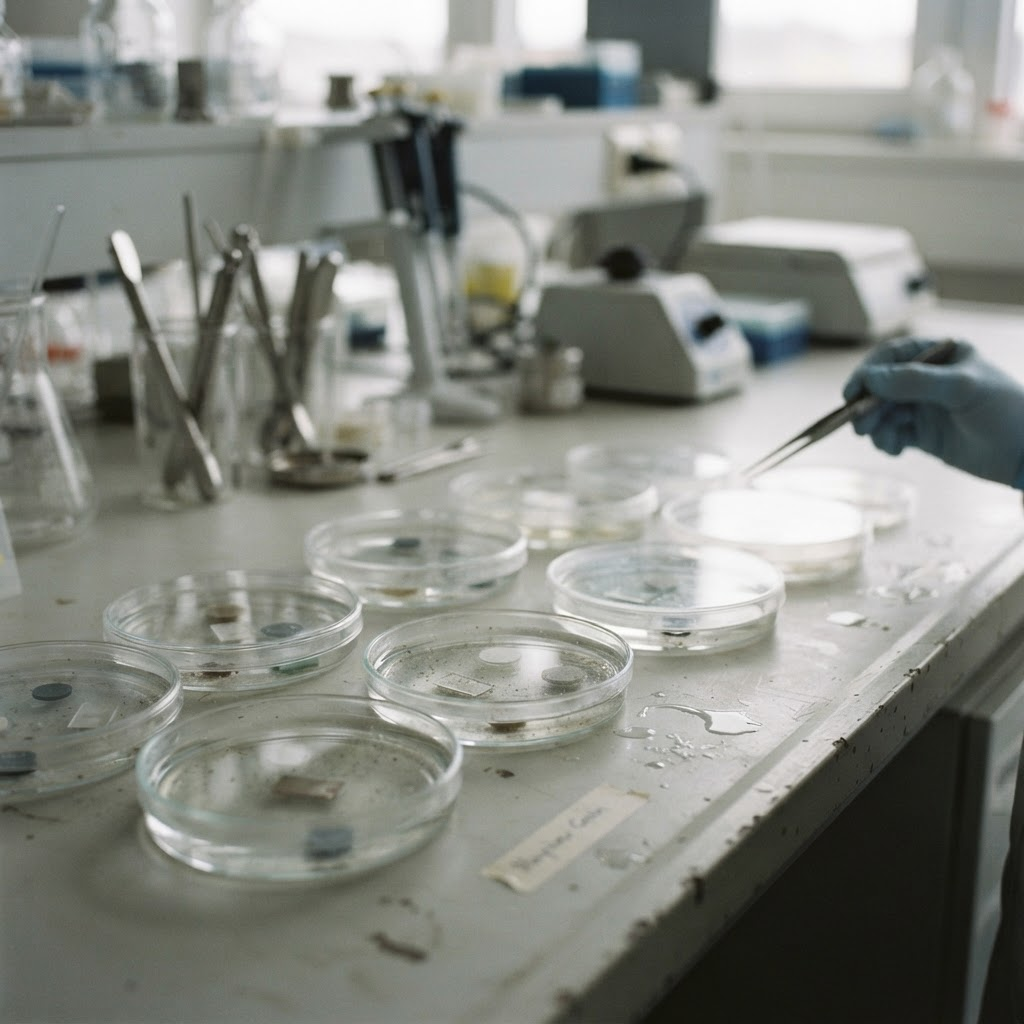
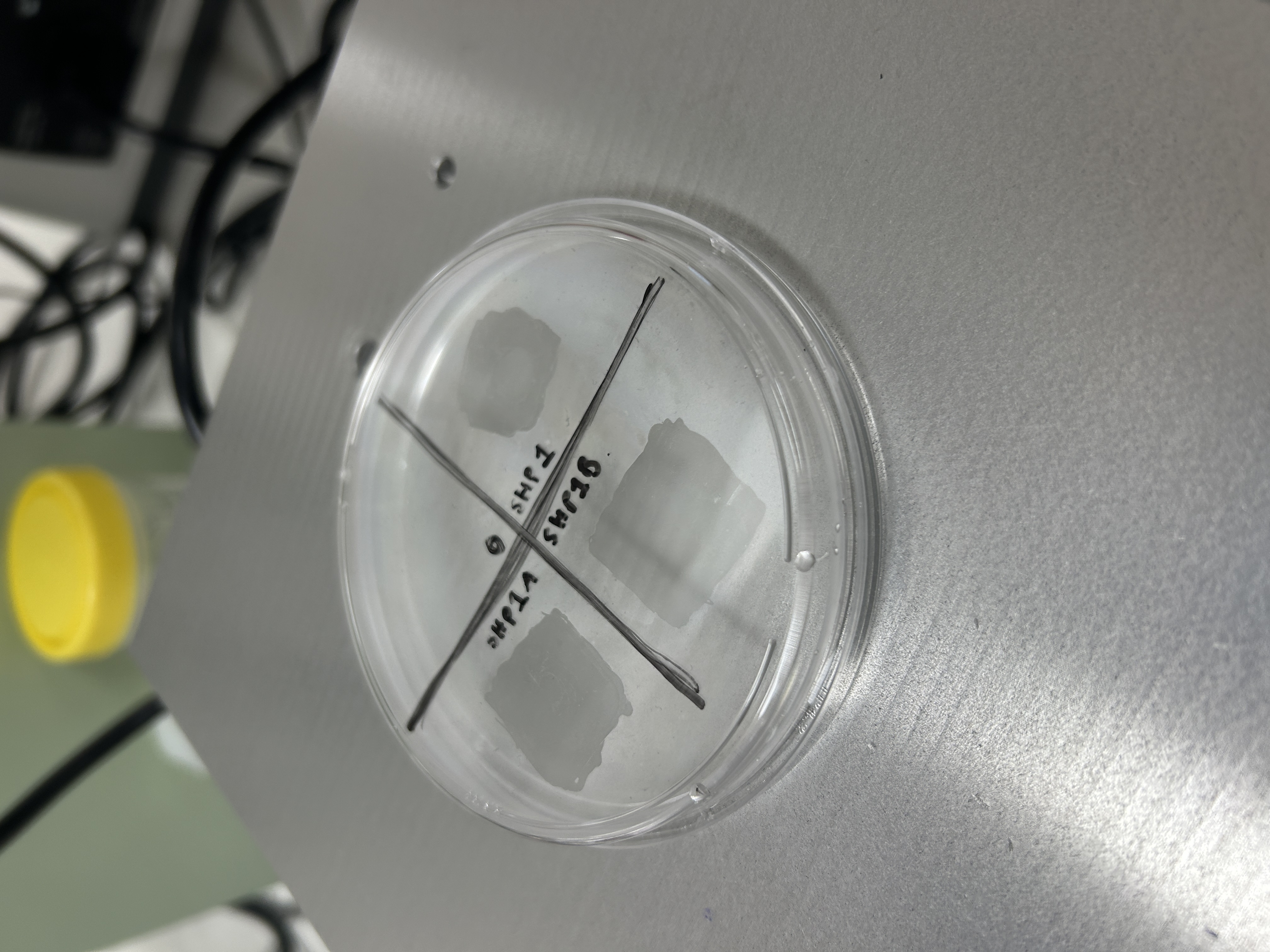
The work today is in the design and preparation of polymer surfaces, and in observing how readily biological material attaches to them. Samples are prepared, exposed under controlled conditions, and compared against untreated references.
We are looking for whether surface design alone can measurably slow the earliest stages of settlement — the conditioning layer and the first biofilm — since that is where fouling either takes hold or does not.
Emerging application
Early evidence of anti-fog performance
Early laboratory observations indicate that Polgaze's superhydrophilic polymer may provide effective anti-fog behaviour by causing condensed moisture to spread evenly across a coated surface rather than forming visibility-reducing droplets.
This creates potential applications across prescription and reading glasses, protective eyewear, vehicle glazing, helmet visors, refrigeration display doors, medical optics, cameras and sensors.
Further testing is underway to evaluate optical clarity, durability, abrasion resistance and performance across glass and polymer substrates.
Where this stands today
This programme is at an early, proof-of-concept stage. The intent is to reduce biological fouling through polymer material design rather than conventional toxic coatings, and that intent is still being tested against evidence.
We are not claiming a finished technology, and we are not yet describing applications. Should the approach prove sound, its relevance would extend to any setting where surfaces sit in contact with water or living environments. That work is ahead of us.